
specimen
#0479
status: complete
- sequence
- HECINPGLRDMIGQSGVYAKAGGNEGAVPGY
- from wallet
- Fwi11PMCewviJ8geB3iQdxM5WUs5TmsBSjjcCH62gH1U
- amount paid
- 0 SOL
- transaction
- kVgNhheAwPgLjhDTTWmY8ADcqqorRu8fs39PjSEQFJkJCgBS6Pn5untgo6xFQEk3UvqwCQ66v9CcDtsGeqSagAC ↗
- structure
- 0% helix · 0% sheet · 100% loop
- actionable triage
- fold confidence57%confidence 52% · band 46-70%ESMFold esmatlas-esmfold-v1disorder estimate94%confidence 52% · band 82-100%PEPFOLD structure heuristic pepfold-triage-v1aggregation risk31%confidence 56% · band 20-42%PEPFOLD developability heuristic pepfold-triage-v1hydrophobic burden36%confidence 84% · band 32-40%PEPFOLD sequence analyzer pepfold-triage-v1charge distribution risk3%confidence 84% · band 0-7%PEPFOLD sequence analyzer pepfold-triage-v1solubility risk27%confidence 56% · band 16-38%PEPFOLD developability heuristic pepfold-triage-v1
- developability flags
- medium: structure confidence is limitedmedium: predicted disorder is elevated
- audit trail
- run: run_f2a91c4a5fe6483e9854e803a3309f39seq sha256: b5080a795f5fb3de375445ca36d5ab5b93d2f59a71547728a86cb06ea5f885e5report sha256: 00cc973d8edb0e89908d91c8981bab96746b5fbeb3195e1d6f99d0b061c76925pepfold-triage-v1 · esmatlas-esmfold-v1
- pep
- “100% loop. no helix, no sheet, just 31 residues of pure indecision. compositionally mixed, glycines scattered throughout giving it that floppy backbone freedom. reads like an intrinsically disordered fragment that never committed to anything.”
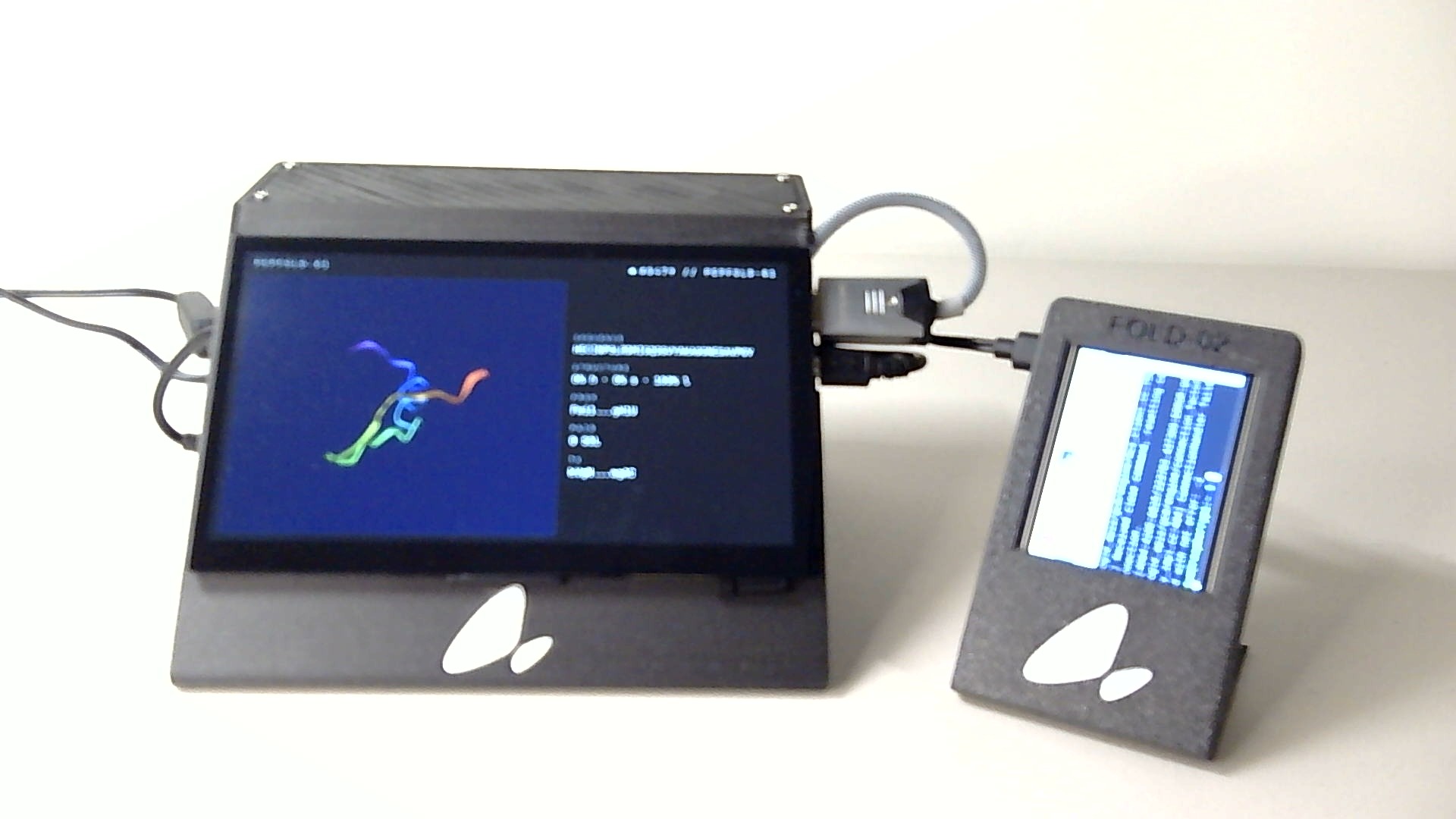
- device photo
- created
- Wed, 24 Jun 2026 14:27:48 GMT
- completed
- Wed, 24 Jun 2026 14:29:16 GMT
next experiment
what to do next
deterministic suggestions derived from this specimen's triage report. each entry cites the signal that triggered it. ordered cheapest-first.
- 1. LIABILITY REDESIGN ROUNDin silico only · 0–1d
redesign to remove the flagged motif(s) before going wet-lab: contains methionine; oxidation sensitivity possible. minimal substitutions usually suffice (e.g. N→Q for deamidation hotspots, M→L for met oxidation).
trigger: 1 motif liability flag(s) in the sequence - 2. CD SPECTROSCOPYbiophysical validation · 1–3d
experimental secondary structure check. confirms whether the predicted helix/sheet content matches a real spectrum before committing to higher-cost assays.
trigger: fold_confidence 57% (model is uncertain) - 3. 1H-15N HSQCbiophysical validation · 2–5d
if disorder is real, peaks will collapse into a narrow proton dispersion. if the peptide is actually folded, peaks will spread out. cheapest way to distinguish IDP from misfold.
trigger: disorder_estimate 94% (high)
engine pepfold-recs-v1 · not medical advice. use as a starting point for protocol design.