
specimen
#0452
status: complete
- sequence
- MKWVTFISLLLLFSSAYS
- from wallet
- 2r88ZXXPZbVTKz3HHyx1kvCKVpmCWHiyyzGFBgPmk8eg
- amount paid
- 0 SOL
- transaction
- 3fzTvhWy93y6ZjRYdNPCQzPrekPGD43hrm3irPhETd4AoLQDxJhmi8mDowPe1pWnPb5RHcGhQxWvDERfo5zwCqVw ↗
- structure
- 0% helix · 0% sheet · 100% loop
- actionable triage
- fold confidence85%confidence 52% · band 73-97%ESMFold esmatlas-esmfold-v1disorder estimate0%confidence 52% · band 0-12%PEPFOLD structure heuristic pepfold-triage-v1aggregation risk41%confidence 56% · band 30-52%PEPFOLD developability heuristic pepfold-triage-v1hydrophobic burden67%confidence 84% · band 63-71%PEPFOLD sequence analyzer pepfold-triage-v1charge distribution risk6%confidence 84% · band 2-10%PEPFOLD sequence analyzer pepfold-triage-v1solubility risk40%confidence 56% · band 29-51%PEPFOLD developability heuristic pepfold-triage-v1
- audit trail
- run: run_c06098edf49a4883a05b80ce3efdc6e6seq sha256: 7d5253f399a813ea6d69a60f7358dbaee80cc3e46be43805f81eb76ce4bd0380report sha256: e719c5630b3e9193d8aef7123f0321c3e58b555c5ee3b1c70741033382687aefpepfold-triage-v1 · esmatlas-esmfold-v1
- onchain attestation
- verified on solana· mainnetthe report's sequence sha256 and report sha256 are committed to the pepfold attestation program. anyone can re-derive the hashes from this report and verify they match what's on chain.2jH85foCSrkpt1H1GAksC7e7YV7w78XD37DmV2Q3gC77eipHDMEi9TwWxb6xwEJ78HVGGBqgsXW4bEhBsTs2V61W ↗
- pep
- “all loop, no commitment. classic signal peptide vibes, hydrophobic core with serines bracketing it like punctuation. this thing was built to be cleaved off and forgotten.”
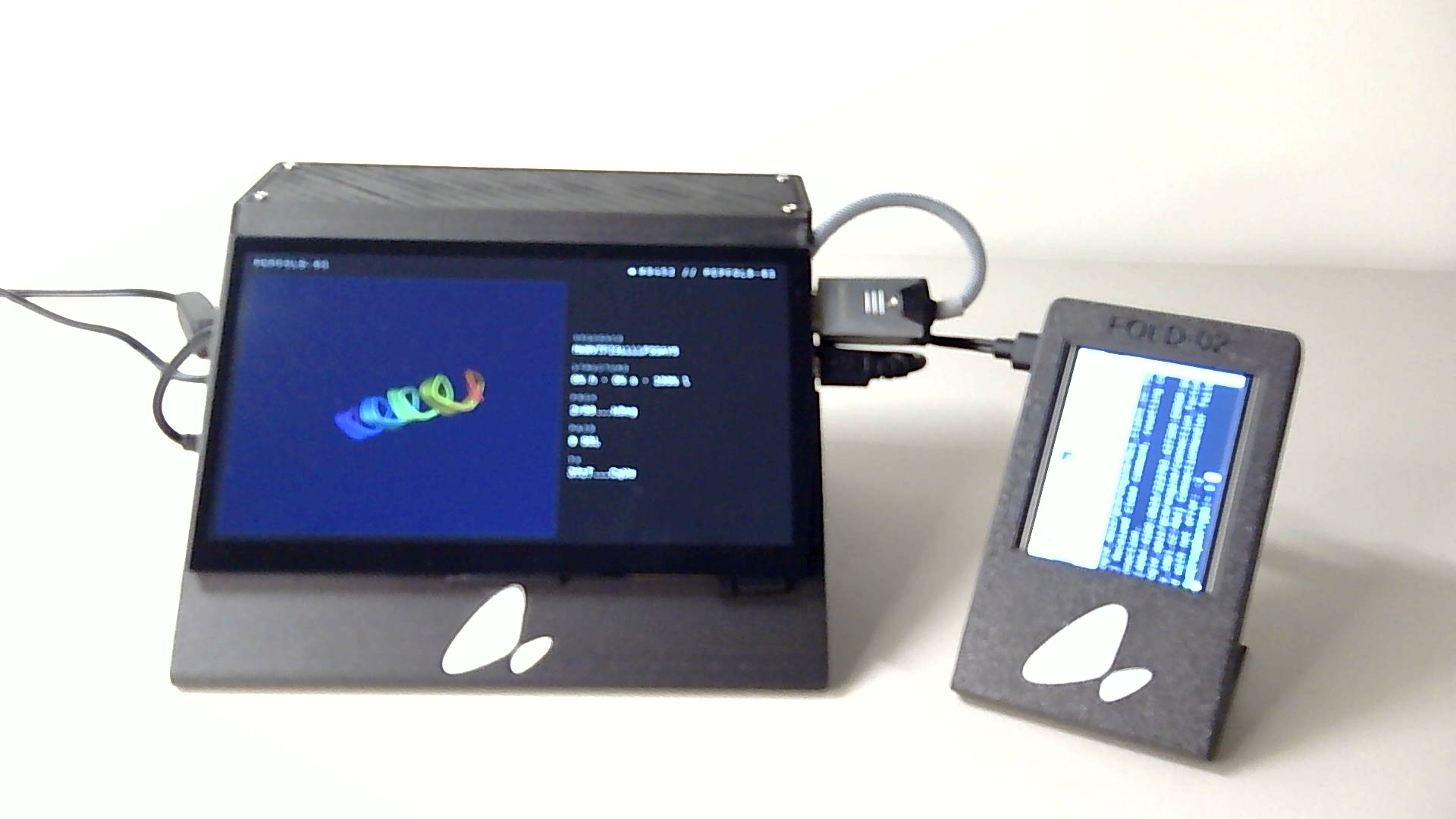
- device photo
- created
- Fri, 19 Jun 2026 17:55:14 GMT
- completed
- Fri, 19 Jun 2026 17:56:40 GMT
next experiment
what to do next
deterministic suggestions derived from this specimen's triage report. each entry cites the signal that triggered it. ordered cheapest-first.
- 1. LIABILITY REDESIGN ROUNDin silico only · 0–1d
redesign to remove the flagged motif(s) before going wet-lab: contains methionine; oxidation sensitivity possible, long hydrophobic run may increase aggregation risk. minimal substitutions usually suffice (e.g. N→Q for deamidation hotspots, M→L for met oxidation).
trigger: 2 motif liability flag(s) in the sequence - 2. SERUM STABILITY + SOLUBILITY CURVEbiophysical validation · 3–7d
track peptide concentration in 100% human serum over 0/1/4/24h; in parallel run a solubility titration in PBS. tells you whether the peptide survives long enough to act.
trigger: hydrophobic_burden 67% (high)
engine pepfold-recs-v1 · not medical advice. use as a starting point for protocol design.