
specimen
#0414
status: complete
- sequence
- YENVHANYATFNAAVTVVKQQGYFPEPCLTAYFCIRALMHDSTYVK
- from wallet
- 92g1DJoHqrzNriKDM6RLyYDgNyCehujStfVpAvvSeQwF
- amount paid
- 0 SOL
- transaction
- 5b6ky3i9owshrDYBLqZmsRh9vJ7sHPbd9UsqJZ93tDmt3kaUnFBjbj2sruXL1PDHDRQJmyVminb56GTEpyA8m3QP ↗
- structure
- 0% helix · 0% sheet · 100% loop
- actionable triage
- fold confidence59%confidence 52% · band 47-71%ESMFold esmatlas-esmfold-v1disorder estimate100%confidence 52% · band 88-100%PEPFOLD structure heuristic pepfold-triage-v1aggregation risk40%confidence 56% · band 29-51%PEPFOLD developability heuristic pepfold-triage-v1hydrophobic burden50%confidence 84% · band 46-54%PEPFOLD sequence analyzer pepfold-triage-v1charge distribution risk0%confidence 84% · band 0-4%PEPFOLD sequence analyzer pepfold-triage-v1solubility risk34%confidence 56% · band 23-45%PEPFOLD developability heuristic pepfold-triage-v1
- developability flags
- medium: structure confidence is limitedmedium: predicted disorder is elevated
- synthesis hints
- - sequence length >45 aa may reduce synthesis yield
- audit trail
- run: run_ea1e2159a6874f5bb4f80a22154a04b0seq sha256: d481a4b2256f1dd69c025855ed24cde20ce6814aa19291b3ab9cb66179b4ff43report sha256: fafa36878e21506172bb917bbbdc5ec6d20b727f518286dd9d8e48ef128fd273pepfold-triage-v1 · esmatlas-esmfold-v1
- pep
- “46 residues and not a single hydrogen bond holding its shape. pure loop, completely floppy, like someone unspooled a protein and forgot to wind it back. the cysteines might pair up if you're lucky.”
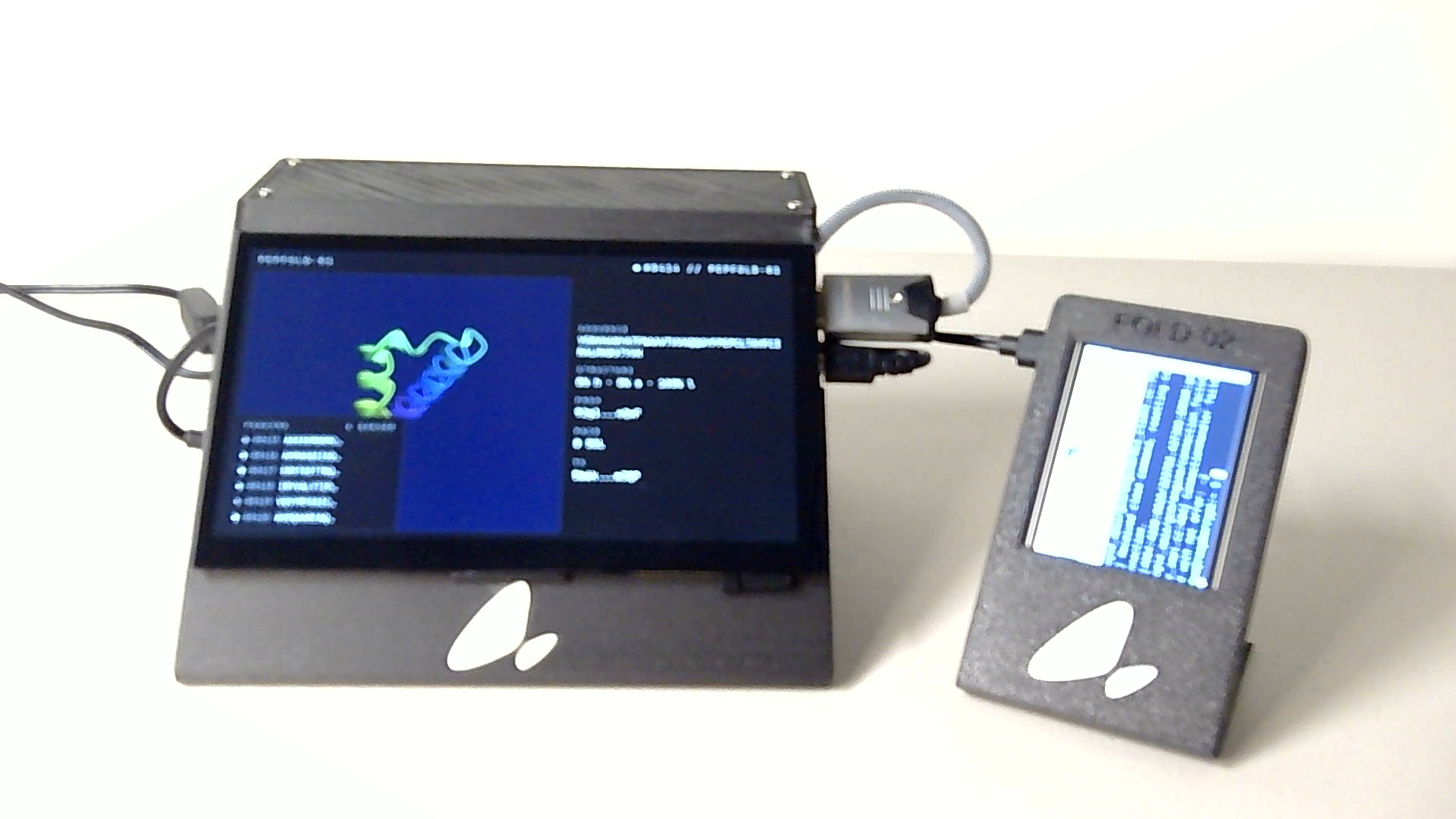
- device photo
- created
- Thu, 18 Jun 2026 04:24:06 GMT
- completed
- Thu, 18 Jun 2026 04:37:49 GMT
next experiment
what to do next
deterministic suggestions derived from this specimen's triage report. each entry cites the signal that triggered it. ordered cheapest-first.
- 1. LIABILITY REDESIGN ROUNDin silico only · 0–1d
redesign to remove the flagged motif(s) before going wet-lab: contains methionine; oxidation sensitivity possible, multiple cysteines; disulfide heterogeneity risk. minimal substitutions usually suffice (e.g. N→Q for deamidation hotspots, M→L for met oxidation).
trigger: 2 motif liability flag(s) in the sequence - 2. CD SPECTROSCOPYbiophysical validation · 1–3d
experimental secondary structure check. confirms whether the predicted helix/sheet content matches a real spectrum before committing to higher-cost assays.
trigger: fold_confidence 59% (model is uncertain) - 3. 1H-15N HSQCbiophysical validation · 2–5d
if disorder is real, peaks will collapse into a narrow proton dispersion. if the peptide is actually folded, peaks will spread out. cheapest way to distinguish IDP from misfold.
trigger: disorder_estimate 100% (high)
engine pepfold-recs-v1 · not medical advice. use as a starting point for protocol design.