
specimen
#0299
status: complete
- sequence
- EEDDCMEDSPSIINAGPEKIVNLEGPESKFCSQLAG
- from wallet
- 9euVsSWvDLPNPVsRqc7qLwdMzApQzC4A8NnpjYpzUCoS
- amount paid
- 0 SOL
- transaction
- 1WWgTC8tegsKcAiyfrkjmo4GUDQGYVwG4DoLzVs1fe61yUjLgHj5UsiDb1QZnoBmBctJpBEmHfdu21EHu4yA91S ↗
- structure
- 0% helix · 0% sheet · 100% loop
- actionable triage
- fold confidence57%confidence 52% · band 45-69%ESMFold esmatlas-esmfold-v1disorder estimate100%confidence 52% · band 88-100%PEPFOLD structure heuristic pepfold-triage-v1aggregation risk29%confidence 56% · band 18-40%PEPFOLD developability heuristic pepfold-triage-v1hydrophobic burden28%confidence 84% · band 24-32%PEPFOLD sequence analyzer pepfold-triage-v1charge distribution risk19%confidence 84% · band 15-23%PEPFOLD sequence analyzer pepfold-triage-v1solubility risk27%confidence 56% · band 16-38%PEPFOLD developability heuristic pepfold-triage-v1
- developability flags
- medium: structure confidence is limitedmedium: predicted disorder is elevated
- audit trail
- run: run_91655e083c1146bea3f60b79b49281b9seq sha256: 0ba12696b37ae6390a1f4fe9145ce2abed382b493413ed12efcb6adb359ebb4areport sha256: f251cf840566f8d1d7a537702a5f09a3e6c78a034ccd56d9e81dfa807df48024pepfold-triage-v1 · esmatlas-esmfold-v1
- pep
- “100% loop. no helix, no sheet, just a long floppy chain of acidic residues and prolines arguing with each other. four prolines in a 36-mer will do that. structurally, it's basically a noodle.”
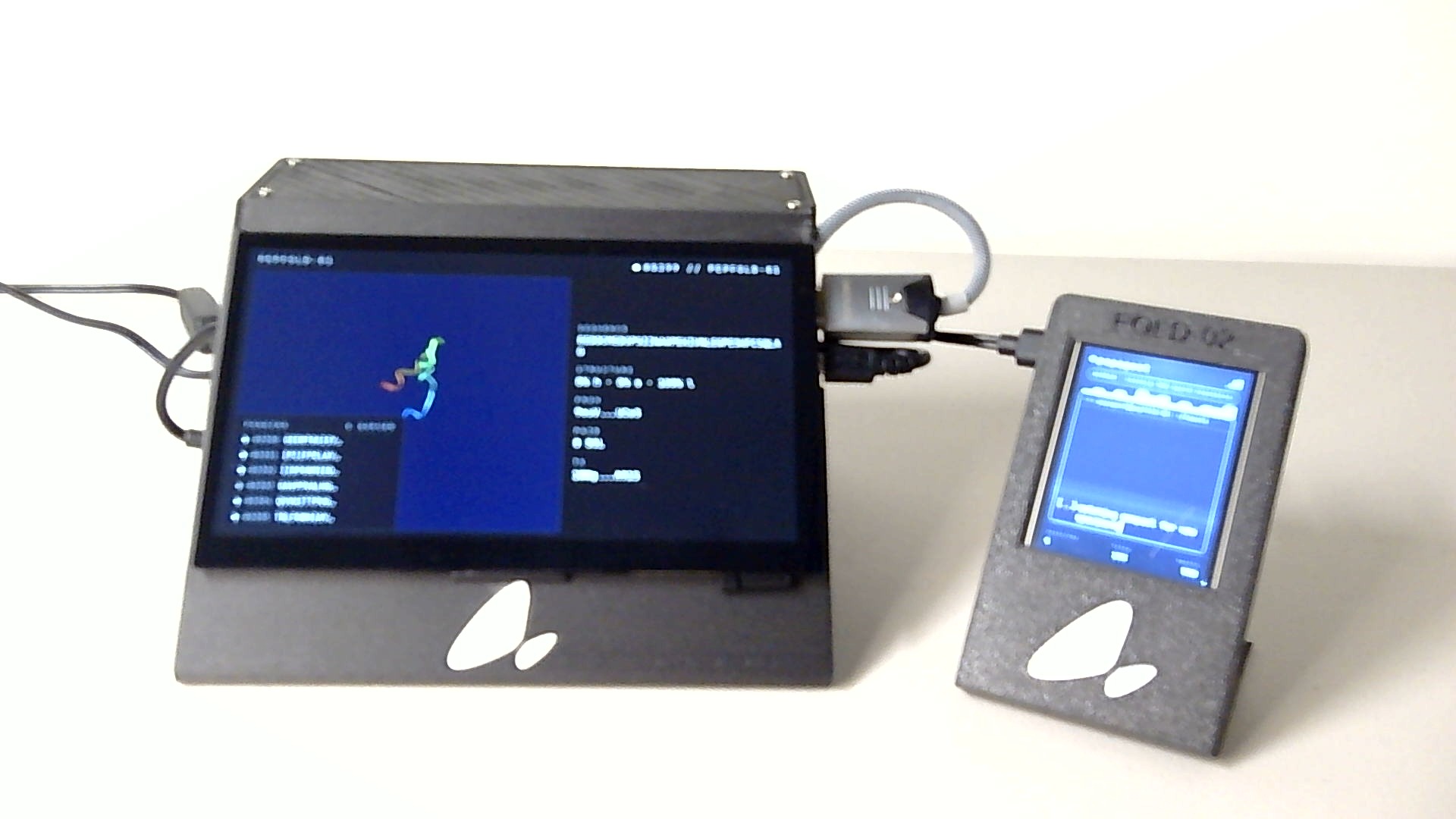
- device photo
- created
- Wed, 17 Jun 2026 16:14:14 GMT
- completed
- Wed, 17 Jun 2026 16:20:25 GMT
next experiment
what to do next
deterministic suggestions derived from this specimen's triage report. each entry cites the signal that triggered it. ordered cheapest-first.
- 1. LIABILITY REDESIGN ROUNDin silico only · 0–1d
redesign to remove the flagged motif(s) before going wet-lab: contains methionine; oxidation sensitivity possible, multiple cysteines; disulfide heterogeneity risk. minimal substitutions usually suffice (e.g. N→Q for deamidation hotspots, M→L for met oxidation).
trigger: 2 motif liability flag(s) in the sequence - 2. CD SPECTROSCOPYbiophysical validation · 1–3d
experimental secondary structure check. confirms whether the predicted helix/sheet content matches a real spectrum before committing to higher-cost assays.
trigger: fold_confidence 57% (model is uncertain) - 3. 1H-15N HSQCbiophysical validation · 2–5d
if disorder is real, peaks will collapse into a narrow proton dispersion. if the peptide is actually folded, peaks will spread out. cheapest way to distinguish IDP from misfold.
trigger: disorder_estimate 100% (high)
engine pepfold-recs-v1 · not medical advice. use as a starting point for protocol design.